From plan to handoff
Plan for the room and the system.
Use a shared room and equipment list to connect facilities, IT, clinical engineering, and the installation team. Record what each location needs and who owns the next step.

Solution area
Bring clinical spaces, physical connectivity, and technology teams into one infrastructure plan.
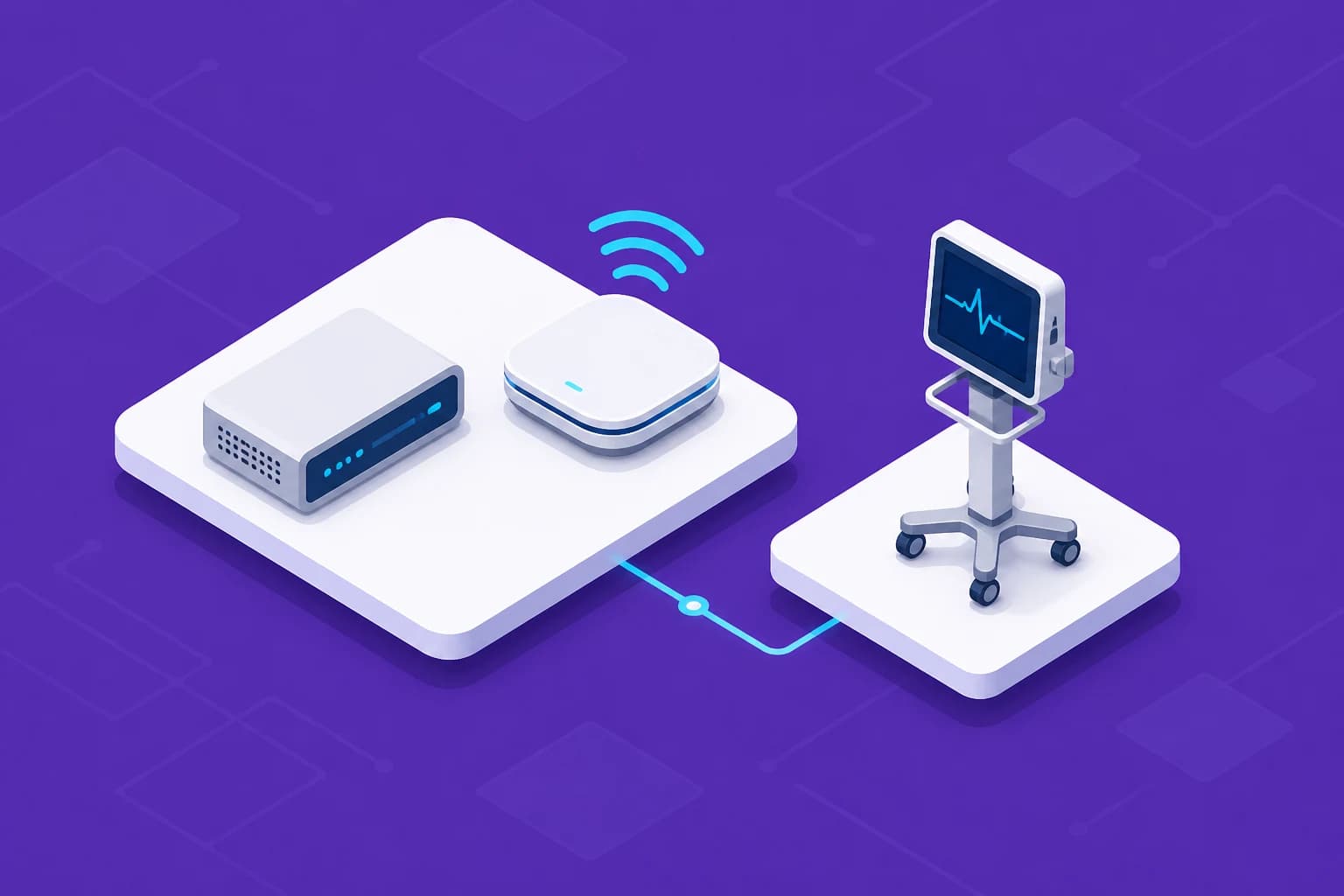
How the work comes together
A device can be in the right room and still be waiting on power, a network connection, or a support owner. Plan those dependencies together so the next installation has a clear starting point.
Each layer relies on decisions made by the teams around it.

Rooms, access, power, mounting, and the conditions around patient care.

Pathways, cable runs, racks, equipment locations, and clear identifiers.

Wired and wireless dependencies, device connections, and IT ownership.

Validation records, open issues, documentation, and the support team.
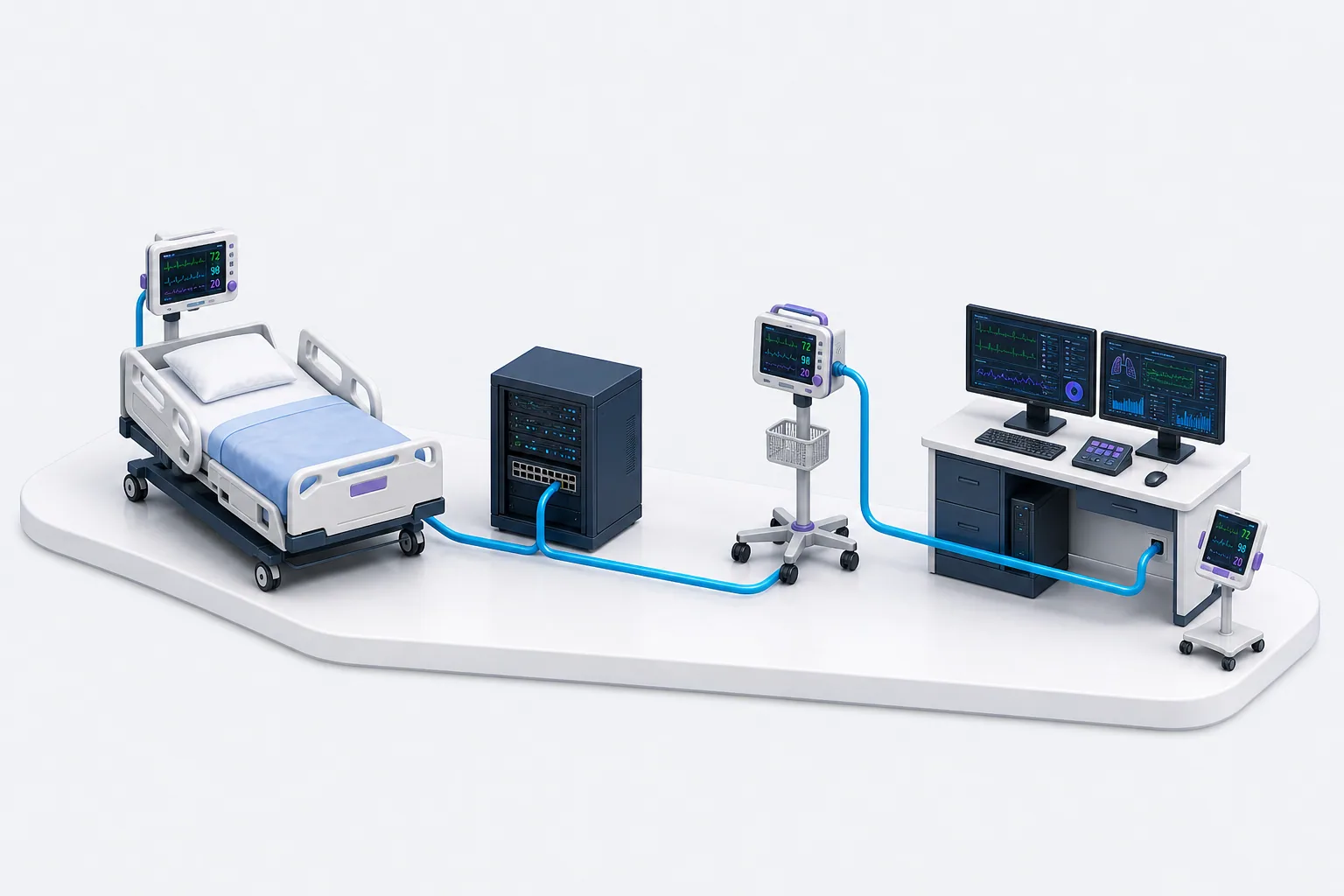
From plan to handoff
Use a shared room and equipment list to connect facilities, IT, clinical engineering, and the installation team. Record what each location needs and who owns the next step.
Planning essentials
Healthcare IT, facilities, clinical engineering, construction, and project teams preparing the physical and network foundation for clinical technology.
What to resolve early
Clinical systems become harder to deploy when rooms, racks, pathways, cabling, wireless, power, network services, devices, testing, and operational ownership are planned separately.
Go a little deeper
List the rooms, clinical systems, endpoints and supporting spaces. Compare the proposed device locations with current drawings, network standards, power requirements and operating constraints.
Name the owners for pathways, cabling, equipment rooms, wireless, network configuration, identity and device connectivity. Record dependencies that require another team or an approved design decision.
Sequence site preparation and connectivity work around access, installation milestones and clinical operations. Keep unresolved prerequisites visible before equipment arrives.
Use the agreed room, network and device checks to record readiness. Close or assign exceptions, then transfer accepted documentation and ongoing ownership to the receiving teams.
Common questions
Yes, if assumptions are explicit. The team can identify rooms, pathways, connectivity, power, mounting, security, and documentation decisions that must remain flexible.
Readiness is tied to the specific environment, interfaces, tests, records, issue-closure process, and receiving owner. Agree on those criteria before work begins.
Related services
Plan the next step
Start with the equipment or systems involved, the locations, timing and the work that needs to move forward. Define the responsible teams and the decisions needed for a practical starting scope.
Plan a service conversation → Healthcare Infrastructure & Cabling
 Medical Device Installation & Implementation
 Planning & Project Management